PhysiotherapyandRehabilitation
Theplastercomesoff,andtherealworkbegins.We'rebuiltforthatparttoo.
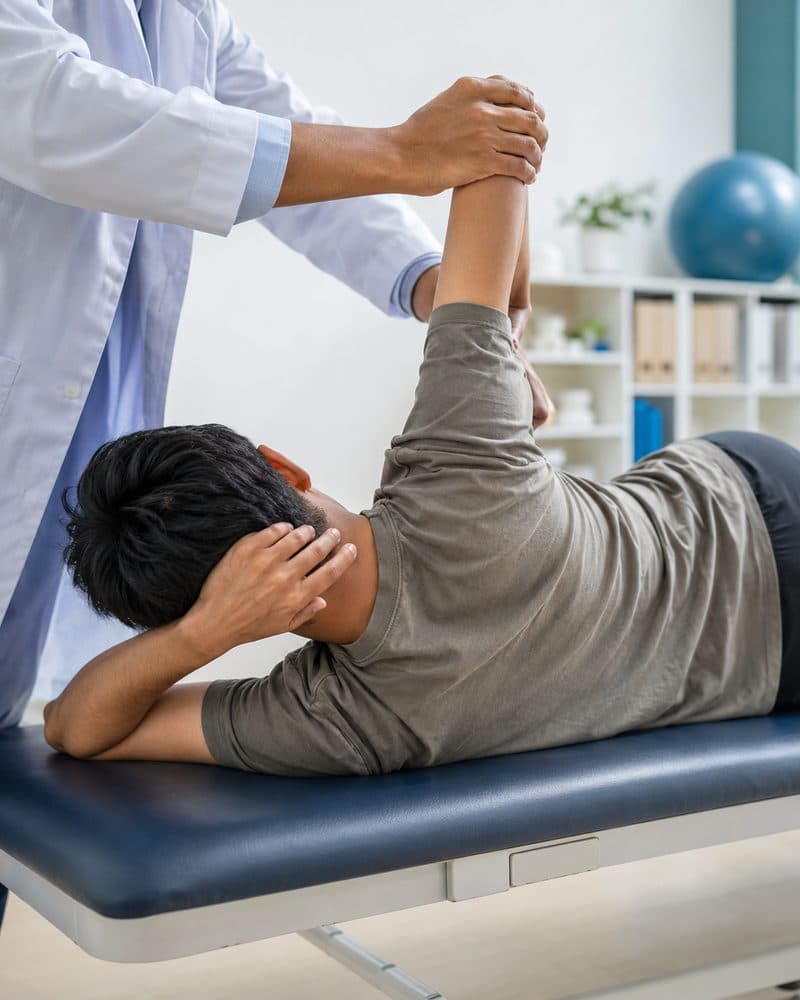
There's a moment every fracture patient knows: the plaster comes off after six weeks, and the arm underneath looks thinner, feels stiff, and refuses to straighten. The bone has healed — the X-ray proves it — but the limb doesn't work yet. This is the gap where recoveries quietly fail, because in most setups the doctor's job ends where the physiotherapist's begins, and the two never speak.
At Patle Health Care Center, the physiotherapy centre is inside the clinic, and that changes the everyday mechanics of getting better. Dr. Patle writes the rehabilitation plan knowing exactly what he fixed and how solid it is. The physiotherapy team progresses you through it, and when something isn't going right — a knee that stays swollen, a shoulder that stalls at half its movement — the surgeon is a corridor away, not a phone number that never picks up.
The centre runs programs well beyond post-fracture recovery: strengthening for arthritic knees that keeps people out of trouble for years, guided rehab for ligament injuries, balance and mobility work for older adults after falls. In each case the philosophy is identical — exercise prescribed like medicine, with a purpose, a dose, and a progression.
Programs We Run at the Centre
- Post-plaster rehabilitation — restoring motion and strength after cast removal
- Post-surgical recovery after fracture fixation and other orthopaedic procedures
- Knee arthritis programs — quadriceps strengthening that measurably reduces daily pain
- Ligament and sports injury rehab, through to return-to-sport testing
- Back and neck pain programs built on movement, posture, and strengthening
- Fall-prevention, balance, and mobility training for older adults
Why Rehab Works Better Under One Roof
The Surgeon Writes the Brief
Rehabilitation starts from precise knowledge of your injury or operation — which movements to push, which to protect, and when the next stage is safe.
Progress Reviewed, Not Assumed
Your program is adjusted based on what your joint actually does each week. Plateaus get investigated — sometimes with a same-day X-ray — instead of being exercised through blindly.
A Program, Not Just Sessions
Every stage has a goal: this range by week three, this strength by week six. You always know what you're working toward and how you're tracking against it.
Home Exercises You'll Actually Do
The sessions between clinic visits are where recovery mostly happens, so you learn a short, correct home routine — demonstrated, corrected, and kept realistic for your day.
Recovery & What to Expect
In rehabilitation, consistency beats intensity — every time. Fifteen correct minutes daily outperforms a heroic hour once a week. Programs here are deliberately kept small enough to live inside a normal working day, because a perfect program nobody follows is worth less than a modest one done every morning.
Frequently Asked Questions
Do I need to be Dr. Patle's patient to use the physiotherapy centre?
New patients are first seen in the OPD so that rehabilitation targets the correct diagnosis — treating 'knee pain' with exercises meant for the wrong condition wastes weeks. After that evaluation, your program runs at the centre with periodic reviews. Existing patients move into rehab as a built-in part of their treatment.
How many sessions will I need, honestly?
It genuinely varies: post-plaster stiffness often improves substantially inside three to four weeks; ligament and post-surgical programs run longer, in stages. What we commit to is telling you the expected duration at the start, showing you the milestones, and not stretching a program that has met its goals.
Physiotherapy hurt when I tried it before. Is that normal?
A stretching, working discomfort during sessions is normal — especially when winning back movement a joint has lost. Sharp pain, or pain that leaves the joint worse for days afterward, is not, and it usually means the program needs adjusting rather than enduring. Because the surgeon is on-site, 'this doesn't feel right' gets investigated quickly here.
Can exercises really help knee arthritis, or is that just something doctors say?
The evidence is solid and the mechanism is simple: the quadriceps muscle is the knee's shock absorber, and strengthening it measurably reduces pain and improves walking in arthritic knees. It requires weeks of consistency before it pays off, which is where most people give up — and where a structured, supervised program earns its keep.