FractureandTraumaCare
X-ray,diagnosis,andtreatmentinthesamevisit—becauseabrokenboneshouldn'tmeanthreetripstothreeplaces.
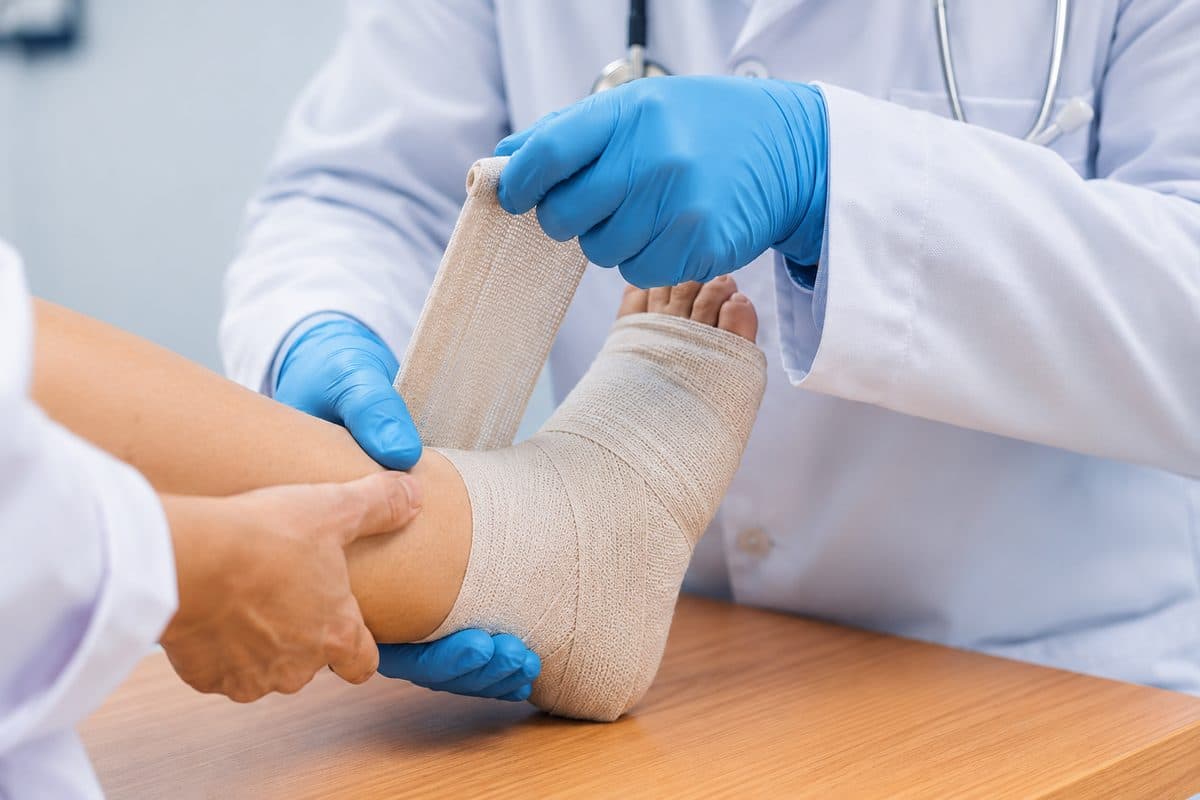
A fall from a two-wheeler on Narmada Road. A child who landed badly on the playground. An elderly parent who slipped in the bathroom. Most fractures we see at the clinic start as ordinary moments — and the first few hours after them are full of confusion. Is it broken or just sprained? Do we need a plaster? Where do we even get an X-ray at this hour?
This is exactly why fracture care at Patle Health Care Center works the way it does. The X-ray machine is inside the clinic, not across town. Dr. Patle examines the injury, images it on the spot, shows you the film, and explains what he sees — in plain words, not radiology jargon. If it's a crack that will heal in plaster, you leave with the plaster on. If the bone is displaced and needs fixing, you leave knowing exactly what the operation involves, why it's needed, and what the alternative would mean.
Over years of orthopaedic practice in Jabalpur, one lesson repeats itself: fractures treated correctly in the first week heal predictably; fractures neglected or treated casually become the stiff wrists, crooked forearms, and painful ankles we see months later. Getting it right early is most of the battle.
Come In Promptly If You Notice
- Swelling and pain after a fall that doesn't ease within a few hours
- A limb that looks bent, shortened, or simply 'not right'
- Inability to put weight on a leg, or to grip and lift with an arm
- A snap or crack you heard or felt at the moment of injury
- Pain from an old injury that never fully settled — bones do sometimes heal in the wrong position, and this can often still be addressed
- Any injury in an elderly person after a fall, even a seemingly minor one — hip and wrist fractures in older adults are easy to miss and costly to ignore
How We Treat Fractures Here
Same-Visit X-Ray & Diagnosis
The digital X-ray is taken during your consultation and read by Dr. Patle with the injury in front of him — not reported remotely by someone who never examined you.
Plaster & Non-Surgical Treatment
Many fractures heal well in a properly applied cast. We reduce the bone if needed, apply the plaster, and schedule X-ray checks to confirm the bone is staying where it should.
Surgery When It's Genuinely Needed
Displaced and unstable fractures are fixed with plates, screws, nails, or wires. You'll always hear why surgery is being advised — and what happens if you choose to wait.
Rehabilitation After the Bone Heals
A healed bone with a stiff joint is only half a recovery. Once the fracture unites, our in-house physiotherapy centre works on the movement and strength the plaster took away.
Recovery & What to Expect
Most fractures take 6 to 12 weeks to unite — faster in children, slower in older adults and in bones with poor blood supply. What you do during those weeks matters: keeping follow-up appointments, not removing the plaster early, and starting physiotherapy at the right time all decide whether the X-ray at three months shows a success story. We schedule these checkpoints for you rather than leaving you to guess.
Frequently Asked Questions
How do I know if it's a fracture or just a sprain?
Honestly — you often can't tell from outside, and neither can we without an X-ray. Severe sprains can hurt more than small fractures. The reliable signs pointing toward a fracture are deformity, inability to bear weight, and bony tenderness at one specific spot. Since the X-ray happens during your consultation here, the question gets answered in minutes rather than days.
Does every broken bone need an operation?
No — and a good orthopaedic surgeon operates on the fracture, not on the X-ray. Undisplaced and stable fractures usually heal in plaster. Surgery earns its place when the bone is displaced, the fracture involves a joint surface, or the pattern is one we know behaves badly in a cast. In OPD, you'll see your own X-ray and understand which category your injury falls in.
My fracture was treated months ago but still hurts. Is that normal?
Some aching during the first months is common, but pain that persists, worsens, or comes with deformity deserves a fresh look. Possible causes include delayed healing, a bone that united in poor alignment, or joint stiffness from the immobilisation itself. Bring your old X-rays and reports — comparing them with a current film usually explains the story quickly.
What should we do at home right after an injury, before reaching the clinic?
Keep the limb still — a folded newspaper or a piece of cardboard tied gently alongside works as a temporary splint. Apply ice wrapped in cloth, keep the limb raised, and avoid letting the person walk on a painful leg. Don't massage the area or pull on the limb to 'set' it. If there's a wound over the injury, heavy bleeding, or the person can't be moved safely, go straight to an emergency hospital first.
Do you treat children's fractures?
Yes. Children's bones are growing and behave differently from adult bones — they bend, buckle, and heal fast, but injuries near growth plates need careful handling because they can affect how the bone grows. Children's fractures are a regular part of practice at the clinic.