In-HouseDigitalX-Ray
TheX-rayhappenswherethedoctoris.Thatonedetailchangesyourwholevisit.
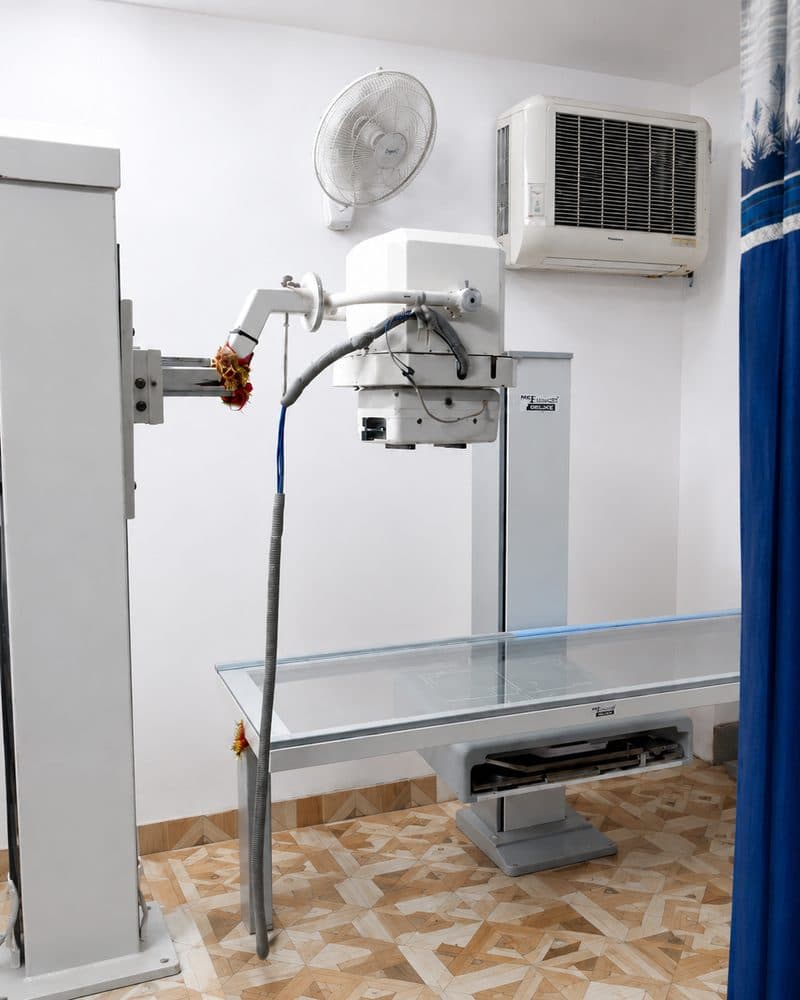
Think about what a fracture consultation usually looks like in most places: you see a doctor, who writes an X-ray referral. You travel — with a painful, possibly broken limb — to an imaging centre across town. You wait. You collect films or a report, sometimes the next day. Then you return to the doctor for the actual diagnosis. Three trips, two waiting rooms, and a day or more of not knowing whether the bone is broken.
At Patle Health Care Center, that entire loop collapses into one room and one visit. The digital X-ray unit is inside the clinic on Main Road, Adhartal. Dr. Patle examines you, takes the views he actually needs, and reads them on screen with you sitting there — pointing at the fracture line or the narrowed joint space and explaining what it means. You leave with a diagnosis and a treatment underway, not a referral slip.
There's a quality argument here too, not just convenience. The doctor treating you chooses the exact views based on his examination, can magnify and adjust the digital image, and interprets it against what your limb actually looks and feels like. Imaging separated from examination loses that context; imaging beside it keeps it.
What We Commonly X-Ray at the Clinic
- Suspected fractures after falls, road accidents, and sports injuries
- Knee, hip, and spine views for arthritis grading and treatment planning
- Follow-up films to confirm a fracture is healing straight and on schedule
- Long-standing joint pain or deformity that has never been properly imaged
- Post-treatment checks after plaster removal or surgical fixation
What Makes In-House Imaging Better
One Visit, Complete Answer
Consultation, X-ray, diagnosis, and the start of treatment in a single appointment — which matters most exactly when moving around is hardest.
Read by the Doctor Who Examined You
Your images are interpreted by Dr. Patle in the context of your history and physical findings — the way imaging is meant to be used.
Digital Clarity, Instant Availability
Digital radiography produces sharp images available on screen immediately, with magnification of suspicious areas — no films to develop, lose, or fade.
Painless Follow-Up Checks
Healing checks become a normal part of your OPD visit instead of a separate errand — so they actually happen on schedule.
Frequently Asked Questions
Can I walk in just for an X-ray?
X-rays here are done as part of an orthopaedic consultation — Dr. Patle examines you first and images what the examination indicates. That's deliberate: an X-ray without clinical context often answers the wrong question. Come during OPD hours (12 Noon–4 PM or 6–9 PM, Monday to Saturday) and both happen together.
Is the radiation from an X-ray something to worry about?
A limb X-ray involves a very small radiation dose, and digital systems keep exposure to the minimum needed for a clear image. X-rays are advised only when the finding would affect your treatment. Do tell the doctor if you are or might be pregnant, so imaging can be deferred or shielded appropriately.
Will an X-ray show everything wrong with my joint?
No, and it's worth being upfront about this: X-rays show bone excellently — fractures, alignment, arthritis changes — but not soft tissue like ligaments, menisci, or muscle. If the examination points to a soft-tissue injury, Dr. Patle will say so and advise MRI only if its answer would change the plan.
Should I bring X-rays taken at other centres?
Please do — old films are genuinely valuable. Comparing today's image with one from six months ago shows whether arthritis is progressing or a fracture line is filling in, which a single snapshot can't. Bring reports too, even for scans done years ago.